MEET SHRINGARIKA AT DILSE DIVA EXPO · 27 SEPTEMBER · AYLESBURY · SHOP THE COLLECTION IN PERSON — VIEW EVENT →
MEET SHRINGARIKA AT DILSE DIVA EXPO · 27 SEPTEMBER · AYLESBURY · SHOP THE COLLECTION IN PERSON — VIEW EVENT →
About Shringarika
About Shringarika
Shringarika was born from two lifelong passions - medicine and Indian textiles. One taught me precision. The other has shaped my life for as long as I can remember. After moving to the UK, I realised that Indian women deserved better access to beautiful occasion wear, without having to wait for their next trip to India. Shringarika brings together a lifetime of textile knowledge with a practical solution to a problem I saw every day.
Shringarika was born from two lifelong passions - medicine and Indian textiles. One taught me precision. The other has shaped my life for as long as I can remember. After moving to the UK, I realised that Indian women deserved better access to beautiful occasion wear, without having to wait for their next trip to India. Shringarika brings together a lifetime of textile knowledge with a practical solution to a problem I saw every day.

Some people discover textiles.
I grew up in them.
Some people discover textiles.
I grew up in them.
Some people discover textiles.
I grew up in them.
I don’t remember a time when textiles weren’t part of my life.
My maternal grandfather was a textile merchant, my mother and aunt are fashion designers, and my maternal uncle runs his own menswear and formalwear brand. Long before I knew words like silhouette or construction, I knew the feeling of fabric between my fingers. I knew that chiffon behaved differently from georgette, that one crepe would fall beautifully while another would refuse to cooperate, and that sometimes the smallest change to a neckline, a sleeve or the fall of a garment could transform the person wearing it.
My mother’s boutique and workshop were such a natural part of my childhood that I never thought of them as somewhere I was “learning” fashion. I was simply there — after school, between classes, around fabrics and fittings, listening to my mother talk to clients and watching tailors and masterjis turn pieces of cloth into something that had previously existed only as an idea. I absorbed it all without knowing that I was absorbing anything. Looking back now, I think that is why so much of what I understand about clothes feels instinctive to me. I didn’t sit down one day and decide to study how fabric behaves. I grew up watching it behave.
I don’t remember a time when textiles weren’t part of my life.
My maternal grandfather was a textile merchant, my mother and aunt are fashion designers, and my maternal uncle runs his own menswear and formalwear brand. Long before I knew words like silhouette or construction, I knew the feeling of fabric between my fingers. I knew that chiffon behaved differently from georgette, that one crepe would fall beautifully while another would refuse to cooperate, and that sometimes the smallest change to a neckline, a sleeve or the fall of a garment could transform the person wearing it.
My mother’s boutique and workshop were such a natural part of my childhood that I never thought of them as somewhere I was “learning” fashion. I was simply there — after school, between classes, around fabrics and fittings, listening to my mother talk to clients and watching tailors and masterjis turn pieces of cloth into something that had previously existed only as an idea. I absorbed it all without knowing that I was absorbing anything. Looking back now, I think that is why so much of what I understand about clothes feels instinctive to me. I didn’t sit down one day and decide to study how fabric behaves. I grew up watching it behave.
Long before I knew this would become my life, other people could already see it.
Long before I knew this would become my life, other people could already see it.
As I grew older, something quietly shifted. I was no longer just the child sitting in the corner of my mother’s boutique, listening and watching. Her clients began asking me what I thought. Which colour suited them better. Whether a neckline should change. Which fabric would fall more beautifully. I was still in school, but my opinion had somehow begun to matter.
Some of them valued it enough to schedule their appointments around my school and class timings, simply so I could be there. I still smile when I think about that. These were grown women, trusting a schoolgirl’s eye enough to wait until she came home before deciding what they would wear. At the time, it never struck me as unusual. I simply loved being part of it. Looking back, I realise how extraordinary that trust was — and how early I had begun doing what I still love doing today: looking at a woman, understanding her, and helping her find the version of an outfit that felt most like her.
As I grew older, something quietly shifted. I was no longer just the child sitting in the corner of my mother’s boutique, listening and watching. Her clients began asking me what I thought. Which colour suited them better. Whether a neckline should change. Which fabric would fall more beautifully. I was still in school, but my opinion had somehow begun to matter.
Some of them valued it enough to schedule their appointments around my school and class timings, simply so I could be there. I still smile when I think about that. These were grown women, trusting a schoolgirl’s eye enough to wait until she came home before deciding what they would wear. At the time, it never struck me as unusual. I simply loved being part of it. Looking back, I realise how extraordinary that trust was — and how early I had begun doing what I still love doing today: looking at a woman, understanding her, and helping her find the version of an outfit that felt most like her.

With my Nanu, my maternal grandfather — a textile merchant, and part of where this story began.
With my Nanu, my maternal grandfather — a textile merchant, and part of where this story began.

Long before I knew where life would take me.
Long before I knew where life would take me.

In the middle, wrapped in a purple saree - dressing up was clearly never just an occasional affair.
In the middle, wrapped in a purple saree - dressing up was clearly never just an occasional affair.
I was always trying to make the clothes in my imagination exist.
I was always trying to make the clothes in my imagination exist.
One of my favourite memories is from my cousin’s wedding when I was 21. For the Sangeet, I had a very specific problem to solve. I wanted my performance to move between a boy look and a girl look as the music changed, and I needed the outfit to transform almost instantly. But being me, I didn’t want the “boy” part to mean simply putting on boy’s clothes. I still wanted the outfit to feel fashionable - and like me.
In my head, I could see exactly what I wanted: a beautiful wide-legged palazzo with a top that worked on its own, and a ghagra that could be worn over it and removed quickly. With one simple change, I could go from one character to another without a complete costume change.
The problem was that this was around fifteen years ago, when palazzos were nowhere near as commonplace as they are today. I was trying to explain the word palazzo to tailors who had never even heard it.
I still remember the frustration of knowing exactly what I could see in my head and not being able to make someone else see it. I had no formal training in fashion illustration, so eventually I started folding and cutting paper, almost like origami, to demonstrate the construction — how wide the legs should be, how the fabric needed to fall, and what shape had to be cut so the finished garment would move the way I imagined.
And somehow, we made it. Looking back, it makes me smile because I certainly wasn’t thinking, I’m ahead of a fashion trend. I had no grand theory about fashion forecasting. I simply knew what I wanted to wear, and when it didn’t exist, my instinct was to figure out how to create it.
Years later, palazzos became ubiquitous. Perhaps that early memory captures what fashion has always been for me. I don’t only look at a garment and ask whether it is beautiful. My mind starts imagining possibilities - what could change, how it could move, how it could be styled, how it could solve a problem, and most importantly, how it could make the person wearing it feel.
One of my favourite memories is from my cousin’s wedding when I was 21. For the Sangeet, I had a very specific problem to solve. I wanted my performance to move between a boy look and a girl look as the music changed, and I needed the outfit to transform almost instantly. But being me, I didn’t want the “boy” part to mean simply putting on boy’s clothes. I still wanted the outfit to feel fashionable - and like me.
In my head, I could see exactly what I wanted: a beautiful wide-legged palazzo with a top that worked on its own, and a ghagra that could be worn over it and removed quickly. With one simple change, I could go from one character to another without a complete costume change.
The problem was that this was around fifteen years ago, when palazzos were nowhere near as commonplace as they are today. I was trying to explain the word palazzo to tailors who had never even heard it.
I still remember the frustration of knowing exactly what I could see in my head and not being able to make someone else see it. I had no formal training in fashion illustration, so eventually I started folding and cutting paper, almost like origami, to demonstrate the construction — how wide the legs should be, how the fabric needed to fall, and what shape had to be cut so the finished garment would move the way I imagined.
And somehow, we made it. Looking back, it makes me smile because I certainly wasn’t thinking, I’m ahead of a fashion trend. I had no grand theory about fashion forecasting. I simply knew what I wanted to wear, and when it didn’t exist, my instinct was to figure out how to create it.
Years later, palazzos became ubiquitous. Perhaps that early memory captures what fashion has always been for me. I don’t only look at a garment and ask whether it is beautiful. My mind starts imagining possibilities - what could change, how it could move, how it could be styled, how it could solve a problem, and most importantly, how it could make the person wearing it feel.
Somewhere along the way, there was a family joke.
Somewhere along the way, there was a family joke.
As a teenager, I loved fashion fiercely, but I was also on a completely different professional path. I was going to become a doctor. My family knew both sides of me so well that a running joke developed about my future: one day, apparently, I would own a two-storey commercial building.
The hospital would be on the ground floor.
And my boutique would be upstairs.
We laughed about it because it seemed to capture the contradiction that was me. Medicine downstairs, fashion upstairs. Two worlds that looked as though they had absolutely nothing to do with one another, somehow living under the same roof.
Life, of course, took its own route. I went to medical school, trained, and became a surgeon. Medicine was my father’s dream for me, and for reasons very close to my heart, it became deeply important to me too. Fashion, meanwhile, was my mother’s world — the legacy I had inherited from her almost without realising it.
My mother, though, was always convinced that no matter where medicine took me, one day I would find my way back to fashion. She knew that part of me too well. Even when I was completely immersed in becoming a doctor, she never seemed to see medicine and fashion as two competing versions of my life. Somehow, she always believed there would be room for both.
I became the surgeon my father dreamed I would be. And years later, just as my mother somehow always knew I would, I found my way back to fashion.
As a teenager, I loved fashion fiercely, but I was also on a completely different professional path. I was going to become a doctor. My family knew both sides of me so well that a running joke developed about my future: one day, apparently, I would own a two-storey commercial building.
The hospital would be on the ground floor.
And my boutique would be upstairs.
We laughed about it because it seemed to capture the contradiction that was me. Medicine downstairs, fashion upstairs. Two worlds that looked as though they had absolutely nothing to do with one another, somehow living under the same roof.
Life, of course, took its own route. I went to medical school, trained, and became a surgeon. Medicine was my father’s dream for me, and for reasons very close to my heart, it became deeply important to me too. Fashion, meanwhile, was my mother’s world — the legacy I had inherited from her almost without realising it.
My mother, though, was always convinced that no matter where medicine took me, one day I would find my way back to fashion. She knew that part of me too well. Even when I was completely immersed in becoming a doctor, she never seemed to see medicine and fashion as two competing versions of my life. Somehow, she always believed there would be room for both.
I became the surgeon my father dreamed I would be. And years later, just as my mother somehow always knew I would, I found my way back to fashion.
Why Shringarika Exists
Why Shringarika Exists
After moving to the UK, I began to experience Indian fashion differently — this time not from inside my mother’s boutique, but as a woman trying to shop for herself and watching other Indian women around me do the same.
A wedding invitation would arrive. Diwali would be approaching. Someone would announce an engagement. And almost automatically, the thought would be: Maybe I’ll buy something when I next go to India.
I understood why. Shopping for Indian occasion wear here could feel surprisingly difficult. You might find something easily available but not quite special enough, or beautiful designer pieces at an entirely different price point. Online shopping gave you endless photographs but very little reassurance. Would that colour actually suit your complexion? Would the fabric fall the way it appeared on screen? Would that neckline flatter you? Would a small alteration make the difference between an outfit you merely liked and one you absolutely loved?
Those questions mattered to me because I had grown up knowing that choosing clothes was never just about choosing clothes.
It was about the woman wearing them.
Her personality. Her proportions. The colours that brought her face alive. The parts of herself she loved showing and the parts she felt self-conscious about. The occasion she was dressing for. How she wanted to move. How she wanted to feel when she entered the room.
That personal conversation — the kind I had watched happen all my life, and had somehow been part of even as a schoolgirl — was what I felt was missing.
And slowly, Shringarika began to take shape.
After moving to the UK, I began to experience Indian fashion differently — this time not from inside my mother’s boutique, but as a woman trying to shop for herself and watching other Indian women around me do the same.
A wedding invitation would arrive. Diwali would be approaching. Someone would announce an engagement. And almost automatically, the thought would be: Maybe I’ll buy something when I next go to India.
I understood why. Shopping for Indian occasion wear here could feel surprisingly difficult. You might find something easily available but not quite special enough, or beautiful designer pieces at an entirely different price point. Online shopping gave you endless photographs but very little reassurance. Would that colour actually suit your complexion? Would the fabric fall the way it appeared on screen? Would that neckline flatter you? Would a small alteration make the difference between an outfit you merely liked and one you absolutely loved?
Those questions mattered to me because I had grown up knowing that choosing clothes was never just about choosing clothes.
It was about the woman wearing them.
Her personality. Her proportions. The colours that brought her face alive. The parts of herself she loved showing and the parts she felt self-conscious about. The occasion she was dressing for. How she wanted to move. How she wanted to feel when she entered the room.
That personal conversation — the kind I had watched happen all my life, and had somehow been part of even as a schoolgirl — was what I felt was missing.
And slowly, Shringarika began to take shape.
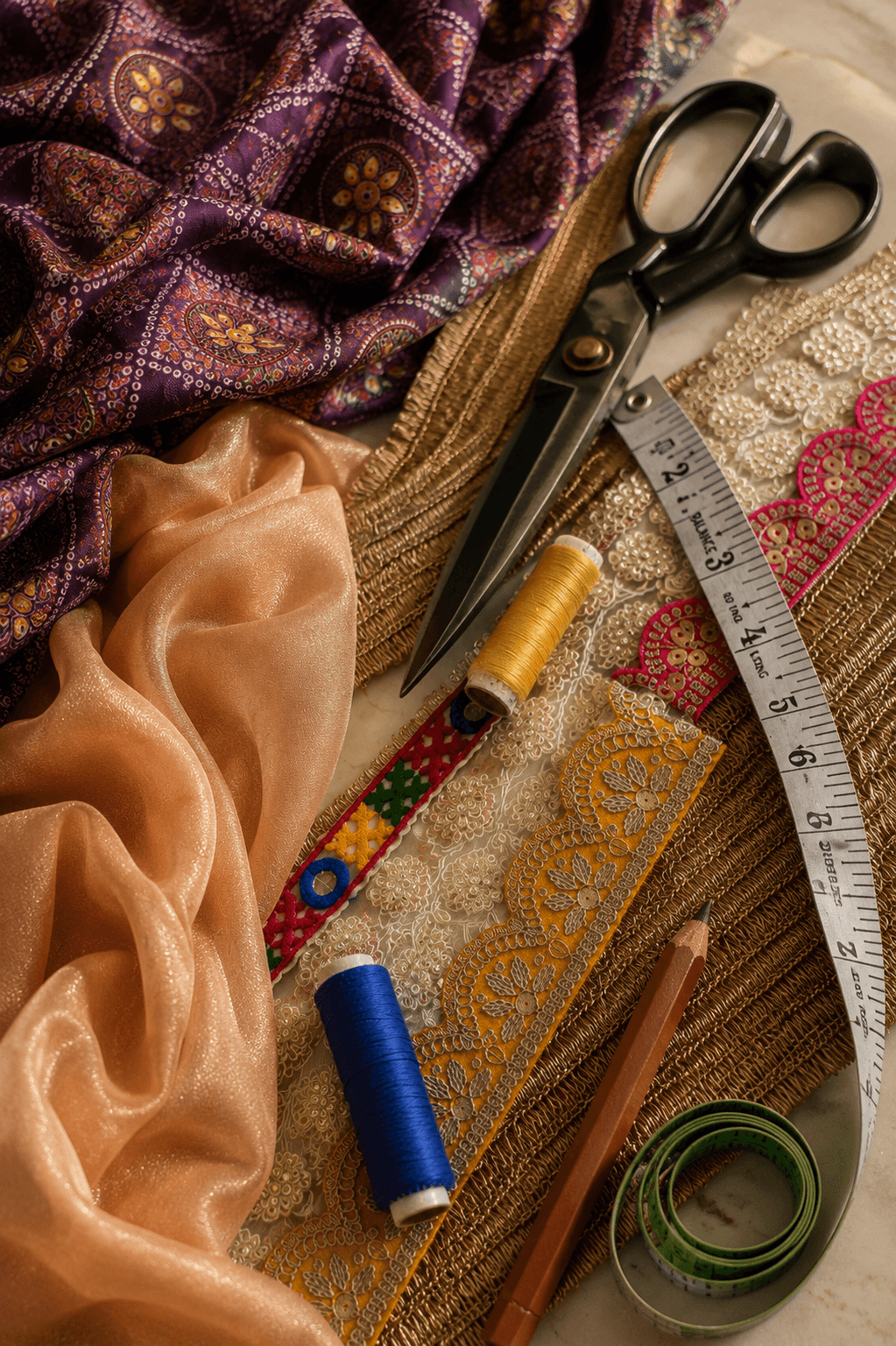
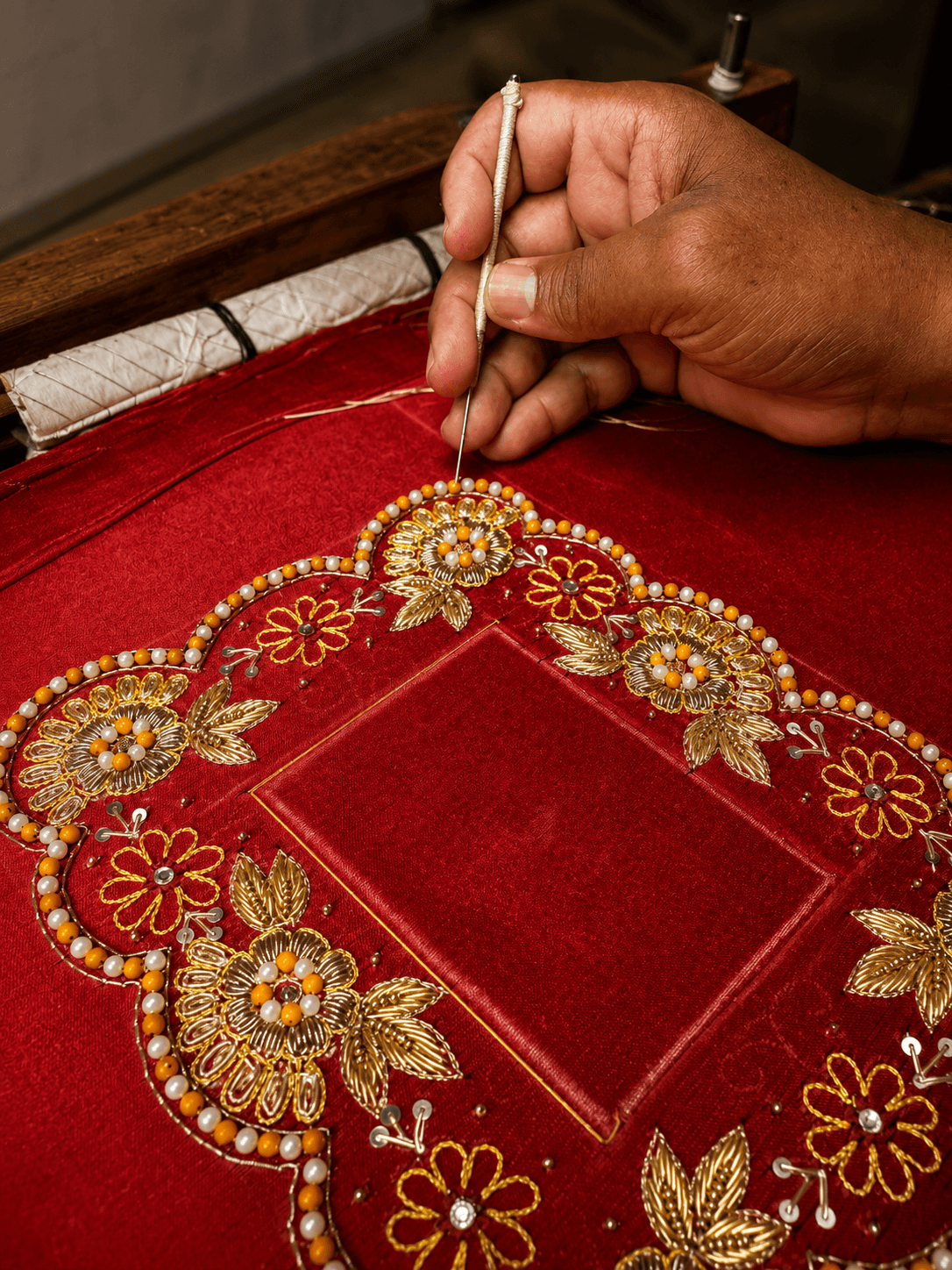

In many ways, I think I have come back to where I began.
In many ways, I think I have come back to where I began.
Shringarika was never meant to be simply a website full of clothes.
I wanted to recreate something of the experience I grew up with: the feeling that there is a real person on the other side who will listen when you say, “I love this, but I don’t know if it will suit me.” Someone you can send a photograph to and ask for an opinion. Someone who will tell you if another colour might work better, whether an alteration could transform the fit, or whether the outfit you had overlooked might actually be the one.
Sometimes I think about my grandfather and the textile world I was born into. I think about those afternoons in my mother’s boutique, the clients who waited for me to come back from class, and the teenage girl cutting and folding pieces of paper because she desperately needed a tailor to understand the trousers she could already see perfectly in her head.
And then I think about how life actually unfolded. I became the surgeon my father dreamed I would be. And years later, just as my mother somehow always knew I would, I found my way back to fashion.
My father is no longer here to see where that journey has taken me, but my mother is. Perhaps mothers really do know best.
Looking back now, what once seemed like two completely different worlds no longer feels like a contradiction at all. Medicine taught me precision, discipline and the responsibility of caring for the person in front of me. Fashion was the language I had grown up speaking without even realising it. Somehow, both found their place.
Shringarika, in may ways, is where both those stories finally meet.
Shringarika was never meant to be simply a website full of clothes.
I wanted to recreate something of the experience I grew up with: the feeling that there is a real person on the other side who will listen when you say, “I love this, but I don’t know if it will suit me.” Someone you can send a photograph to and ask for an opinion. Someone who will tell you if another colour might work better, whether an alteration could transform the fit, or whether the outfit you had overlooked might actually be the one.
Sometimes I think about my grandfather and the textile world I was born into. I think about those afternoons in my mother’s boutique, the clients who waited for me to come back from class, and the teenage girl cutting and folding pieces of paper because she desperately needed a tailor to understand the trousers she could already see perfectly in her head.
And then I think about how life actually unfolded. I became the surgeon my father dreamed I would be. And years later, just as my mother somehow always knew I would, I found my way back to fashion.
My father is no longer here to see where that journey has taken me, but my mother is. Perhaps mothers really do know best.
Looking back now, what once seemed like two completely different worlds no longer feels like a contradiction at all. Medicine taught me precision, discipline and the responsibility of caring for the person in front of me. Fashion was the language I had grown up speaking without even realising it. Somehow, both found their place.
Shringarika, in may ways, is where both those stories finally meet.
Find your next favourite outfit
Find your next favourite outfit
Whether you're shopping for a wedding, a festival or simply because you deserve something beautiful, I'd love to help you find a piece that feels like you.
SHRINGARIKA
SHRINGARIKA
Grace in Every Thread
Appointment-led Indian fashion boutique in Bexleyheath, London. UK-wide delivery available.
© 2026 Shringarika. All rights reserved.